
Hiring can feel like a big financial risk for an independent optometry practice. Payroll is one of your largest expenses. Wages have gone up, good employees can be hard to find, and no practice owner wants to add another salary only to find that the position doesn't generate enough value to justify the cost.
Many eye doctors ask us, "How can I afford to hire?” But there's another question worth asking: Can you afford not to hire?
When you're understaffed, the impact can show up in places that are harder to see on a P&L. Patients wait longer. Collections fall behind. Optical opportunities are missed. Doctors end up managing the books instead of focusing on patient care. And your existing team gets stretched thin trying to keep up.
So, what makes hiring feel like such a risk in the first place? And what happens when that caution keeps you from adding the people your practice needs?
Why hiring feels riskier than it is
Most doctors think of themselves as logical decision-makers. But fear plays a bigger role in hiring decisions than most owners want to admit. That fear usually shows up as caution: a natural instinct to hold the line on spending rather than risk a bad hire.
The problem is that instinct often works against you. You're more likely to underspend on staff than overspend—and pay for it in lost patients, lower revenue, and a worn-down team.

Think of hiring as an investment, not an expense
Stop asking, "What can I afford to spend?" and start asking, "What do I need to spend to get where I want to go?"
It's the difference between treating payroll as a fixed cost and treating it as an investment in your practice. Rather than starting with what you can afford, start with the goal—more revenue, a new service line, shorter wait times, or more time for doctors to focus on patient care. Then work backward from there to figure out who you need on your team.
(Nathan Hayes and Dr. Steve Vargo dig deeper into this mindset on the Eye Own a Business podcast. Watch the full episode here.)
Staffing isn't the only way to see more patients, shorten wait times, or free up a doctor's schedule. Technology, better processes, or outsourcing some tasks can help too. But when those aren't enough on their own, adding the right person is often the fastest way to get there.
How much should you be spending on payroll?
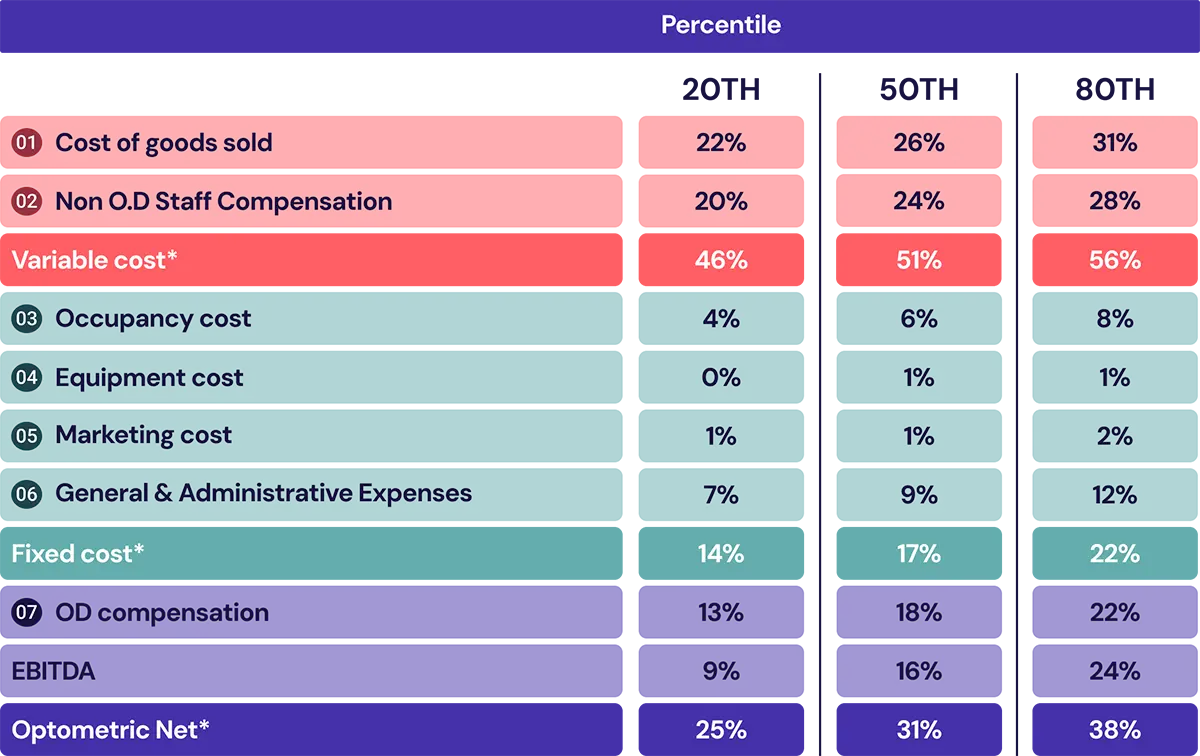
You know your practice better than any spreadsheet does. If your team feels stretched thin, you should trust that instinct. But the numbers below can help you put that feeling in context.
- Non-OD staff payroll: Typically 21% to 30% of gross revenue for practices today, up from roughly 18% to 24% a decade ago.
- Doctor payroll: Typically adds another 15% to 20%, including owner compensation.
- Revenue per non-OD staff member: Practices generated roughly $150,000 in collections per staff member a decade ago. Today, that figure is closer to $200,000 as wages have increased and practices rely on fewer, more productive employees.
If your payroll falls well below these ranges, you may be understaffed. If it sits well above them, salary creep or overstaffing could be contributing to higher costs. Either way, use the numbers as a starting point for evaluating your staffing, not as a verdict.
Define the role before you post the job
Before you post a job, get specific about what you need from the role. What will this person be responsible for day-to-day? What skills and personality traits will help them succeed? Does the role call for someone personable, detail-oriented, efficient, or some combination of all three?
That clarity helps shape everything from where you recruit to how you evaluate performance and measure productivity once they’re on the team. Every role has metrics you can monitor, even when the results aren’t always easy to quantify:
- Receptionists: how full the schedule stays, how quickly calls get answered, and whether pre-authorizations happen on time.
- Technicians: how efficiently and accurately pre-testing is completed.
- Opticians: sales and capture metrics that show how effectively they support the optical.
- Billers: collections, accounts receivable, and how quickly outstanding balances are addressed.
- Managers: their impact can be harder to measure directly, but strong managers keep the team moving, solve problems, and give doctors more time to focus on patient care.
This isn’t about reducing every employee to a number. It’s about knowing what strong performance looks like in each role and setting clear expectations around it.
A high-performing employee in the right role can create value beyond the cost of their compensation. Give them clarity, hold them accountable, and trust them to do the job you hired them for.
When a hire isn’t working, address it
Hiring well matters, but so does knowing when a hire isn't working out. Address performance issues early, with clear, direct feedback. Sometimes that's enough to turn things around. Other times, it helps the employee see that the role isn’t the right fit and decide to move on.
Keeping someone in a role where they're not succeeding doesn't help them, your team, or your practice. Your strongest performers can support a teammate who needs extra help. What wears them down is seeing ongoing performance issues go unaddressed.
Set clear expectations, give people a fair chance to meet them, and make a change when the fit isn't right. That's fair to your team, and it's fair to the employee, too.
Should you offer bonuses, or just pay more?
A bonus can be a useful starting point for conversations about goals and performance, but the incentive itself may not change performance as much as you’d expect. Often, a more effective approach is to pay slightly above market rate, hold people accountable to clear metrics, and skip the complicated bonus structure altogether.
For associate doctors, production-based compensation can create a more direct connection between pay and performance. For non-OD staff, a steady, dependable paycheck usually means more than the promise of an occasional bonus check.
But compensation is only one part of what keeps good people on your team. Don't underestimate culture.
Employees rarely leave purely over a dollar amount. More often, they're looking for something different in their day-to-day experience. When people feel valued, they're more likely to stay even when a competitor offers slightly higher pay.

What is understaffing costing you?
Sometimes the math is simple. If you have $90,000 in receivables sitting over 90 days, hiring a biller may be an expense you can’t afford to skip. If the right hire helps bring that money in, the position could pay for itself.
Other times, the cost of staying understaffed is harder to quantify. It can show up as:
- Missed optical opportunities: Patients don't make it to the optical because no one has time to guide them there.
- Longer exam times: Appointments run long, affecting the patient experience and limiting how many patients your doctor can see.
- Administrative overload: Your doctor spends time on work someone else could handle instead of focusing on patient care.
- Lost productivity: Your existing team spends time covering gaps instead of focusing on the work they're best equipped to do.
Understaffing doesn't always show up as a single line item on your P&L. It can show up in missed revenue, lost productivity, longer wait times, and work that never gets done.
Make the hiring decision with data, not fear
Hiring is an investment, and like any investment, you're taking on some risk. But the practices that grow are the ones willing to ask what they need to get where they want to be—and then find the people who can take them there.
So, how do you know if your staffing spend is too high, too low, or aligned with what your practice needs right now?
In the 2025 Benchmark Report, you'll discover what “normal” looked like for independent optometry practices in 2025, including staffing, overhead, revenue, and profitability benchmarks.
Use the benchmarks to put your own numbers in context, identify areas that may need attention, and make more informed decisions about where to invest, improve, or grow. Think of the report as a guide, not a pass-or-fail test.